Surveying has always played an integral role in construction, mining, agriculture, and infrastructural projects. The more accurate data a company has about the surveyed territory, the more effective its work will be.
However, surveys carried out in a traditional way demand plenty of time spent by several specialists, along with revisits to the same place. Hence, it is necessary to apply innovations that would facilitate this procedure by making it faster and easier. Drones can be considered an innovation in this field.
At Aeromao Inc., we have seen how beneficial drone surveys could be for businesses, when it comes to effectiveness and quality. In this blog, we will discover what drone mapping is and how revolutionary it is for the surveying industry.
What Is Drone Mapping?
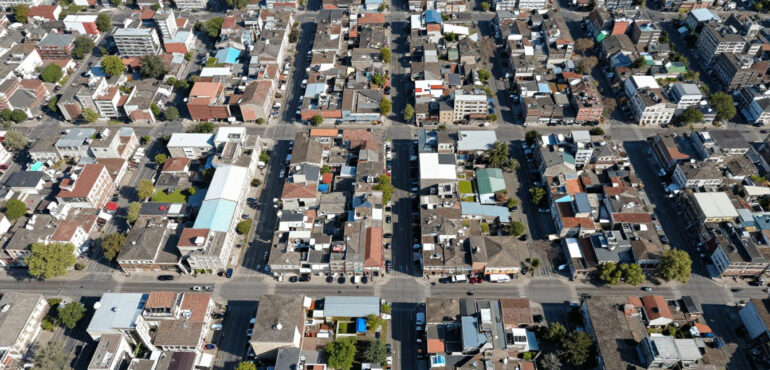
The technique of making use of unmanned aerial vehicles to make geographic data collection and mapping is referred to as drone mapping. In this process, a drone flies over the selected area during its mapping journey and gathers data and images of the geographical features. This data and image are then processed by the mapping software in order to create orthomosaic maps, 3D models, elevation studies, and topographical surveys.
Unlike other techniques, such as land surveys, where one is required to physically access the site, drone surveying collects the data from above-ground levels. It is faster and more efficient than many other methods used today.
How Traditional Surveying Methods Worked
Prior to the prevalence of drones for mapping, surveying was traditionally done by using techniques such as field surveys, GPS, total stations, and even manned aerial surveys. While all these methods continue to be valuable for a variety of applications, each of them is usually associated with increased time consumption, manpower needs, and increased costs.
One of the drawbacks in ground surveying is that it is done point by point, and this poses a challenge during such an activity in the forested regions, mining zones, the coastlines, and even the mountains.
Airborne surveys involving manned aircraft could be done over a wider range, although they are more expensive compared to drones. The search for a more viable way forward made drone mapping the preferred choice for companies.
Why Drone Mapping Is Transforming Modern Surveying
Faster Data Collection
One of the biggest reasons drone mapping is transforming surveying is speed. An aircraft UAV can cover large areas of land in a significantly reduced amount of time compared to doing so by hand. Surveyors will not have to wait for days to obtain information from the ground when aerial surveying is available to them.
For industries managing active construction projects or changing environmental conditions, faster access to updated mapping information can make a major difference.
Improved Accuracy
The modern technology used in drones for mapping is known as RTK and PPK, which increases spatial accuracy up to centimetre levels. In addition, because drones fly according to predetermined paths, they generate uniform results.
At Aeromao Inc., we have seen how improved mapping accuracy helps industries reduce measurement errors, improve planning quality, and simplify project monitoring over time.
Better Safety for Survey Teams
The other advantage of drone surveying is enhanced safety during operations. Manual surveying in such tough terrains exposes the surveyors to the risks associated with unstable ground conditions, high altitude areas, industrial environments, and distant locations. UAV systems limit the requirement for human contact with the environment being surveyed.
Such situations are common in mineral exploration sites, coastal regions, environmental studies, and construction surveys.
Cost Efficiency
Drone surveying also assists in reducing operational costs. This is because, by using unmanned aerial vehicles, fewer hours are spent on-site and thus labour costs are reduced. Most importantly, for some organizations, it is possible to carry out surveys without revisiting the areas again and again, thanks to the accurate data that is collected at one go.
Through time, such savings can greatly enhance project management, especially for those companies that deal with regular surveys within extensive locations.
Access to Hard-to-Reach Sites
There are some places that are hard to access through conventional means. This includes dense forests, wetlands, hilly terrain, marine locations, and distant industrial areas.
In such situations, drone surveying helps firms overcome such challenges by ensuring that the UAV is able to take off and conduct aerial imaging. For example, fixed wing UAVs are very effective when it comes to accessing large tracts of land due to their longer operating duration.
Real-Time Project Updates
Contemporary drone mapping systems also provide real-time updates regarding ongoing projects. For example, construction companies can easily contrast the present status of a project with previous data.
Similarly, environmental bodies can monitor alterations in plant life, coastline changes, or endangered zones. Such capabilities to collect timely data help organizations make faster and better-informed decisions.
Technologies Used in Drone Mapping
There are various technologies that are used to improve the efficiency of drone surveying systems.
- GPS and GNSS Technologies
These technologies can be used in maintaining accuracy and ensuring proper positioning of drones when performing aerial mapping missions. This is made possible through RTK or PPK correction techniques.
- Photogrammetry
This is the technique of creating geographic measurements from overlapping aerial images using photogrammetry software. Using this technology, drones are able to create highly detailed orthomosaics, 3D terrain maps, and elevation datasets.
- LiDAR Technology
LiDAR instruments use laser light beams to determine elevation and structure. An important characteristic of LiDAR mapping is that it can go through forest canopies in order to get elevation readings. Thus, it is extensively applied in forestry, environmental mapping and infrastructure planning.
- Thermal and Multispectral Sensors
These sensors collect information about environments using thermal or multispectral cameras in addition to ordinary images taken by visible-spectrum cameras. This information comes in handy in agricultural, energy inspection, environmental monitoring and water management tasks.
At Aeromao Inc., we keep working with drones that can integrate advanced sensing technologies for use in industrial mapping purposes.
- Mapping Software and Data Processing
Collected aerial data becomes useful only after processing. Modern mapping software helps organize drone imagery into detailed maps, models, and geospatial reports. Cloud processing and automated analysis tools are also improving the speed of survey reporting and project collaboration.
Industries Benefiting From Drone Mapping
Drone surveying is now used across several industries because of its ability to improve operational planning and data reliability.
Construction and Infrastructure
The construction sector makes use of drones in mapping and surveying sites to plan for earthworks, project progress, and documentation of the project. Consistent mapping helps to identify problems and coordinate the project.
Mining Industry
Drones are used in mining operations to map out stockpiles, terrains, and monitor operations. Drones are essential in making mining safe by ensuring miners operate in a less hazardous mine area.
Precision Agriculture
In agriculture, drone technology is employed in monitoring crops, analyzing irrigation patterns, and assessing the effectiveness of operations. Multispectral images are taken that help in determining the well-being of crops and the effective management of resources.
Forestry and Environmental Monitoring
Environmental organizations and the government make use of drones in mapping forests to determine the well-being of flora and fauna, soil erosion, and conservation zones. Mapping drones collect information without disrupting the environment.
Oil and Gas Inspection
Pipeline and oil companies utilize drones for assessing infrastructure and pipelines, monitoring facilities and conducting infrastructure surveys in distant industrial facilities. The drone technology reduces inspection time and improves operational access.
Coastal and Marine Surveillance
Drones are used by coastal authorities and marine scientists to survey coastlines, conduct environmental assessments, and carry out marine surveillance activities. The utilization of long-range drones ensures that extensive surveys can be conducted.
Challenges and Considerations Involved in Drone Mapping
Even with all the advantages of drone mapping, the process should be well planned. Factors such as regulatory permits, pilot qualifications, weather, and flight procedures affect map accuracy and efficiency.
The processing of data may also be difficult when handling large-scale projects, where there is a need to combine thousands of aerial photos. There is also a need to select the appropriate UAV system.
This is why working with experienced UAV providers becomes important. At Aeromao Inc., we assist businesses in developing effective mapping processes that can be used for extended missions, surveys, and complex aerial data gathering activities.
Conclusion
The advantage of drone mapping technology has brought about a significant transformation in the surveying process, which is now easier, more precise, safer, and more adaptable than ever before. Drones have been identified by industries like construction, agriculture, and mining as an efficient means of data gathering as opposed to traditional surveying techniques. As the evolution of aerial imaging technology proceeds further, companies are increasingly turning to drones to aid in planning and decision-making based on collected data.
However, it is important for you to note that you will have to be sure about selecting the right UAV provider. Established firms provide support for industrial geospatial activities with sophisticated fixed wing UAVs, BVLOS technology, and aerial surveying services designed for harsh conditions.
Get in touch with Aeromao Inc. now to find out more about our UAV mapping solutions.
FAQS
Where are drones used for mapping?
Drones for mapping are used in various industries, including construction, mining, agriculture, and land development projects for surveying, inspection, planning, topographical mapping, and 3D modelling.
How precise can a drone survey be?
The use of RTK and PPK drone technologies makes it possible to achieve centimetre-precision drone survey results.
Is drone mapping surveying superior to regular surveying?
Drones provide a fast and cost-efficient solution for extensive areas, but regular surveying is still valuable in specific ground-based applications.
In which industries is drone mapping surveying applied in Canada?
Various industries, including construction, forestry, mining, agriculture, oil and gas exploration, and environmental protection, widely apply drone surveying across Canada.
What kind of drones are used for surveying and mapping?
Fixed wing drones are usually utilized for large-scale surveys, while rotorcraft drones are better suited for small-area projects and detailed inspections.
How much time does it take for a drone mapping survey?
Depending on the scale of the project, the terrain, and the weather, the majority of drone surveys can be finished in a few hours.